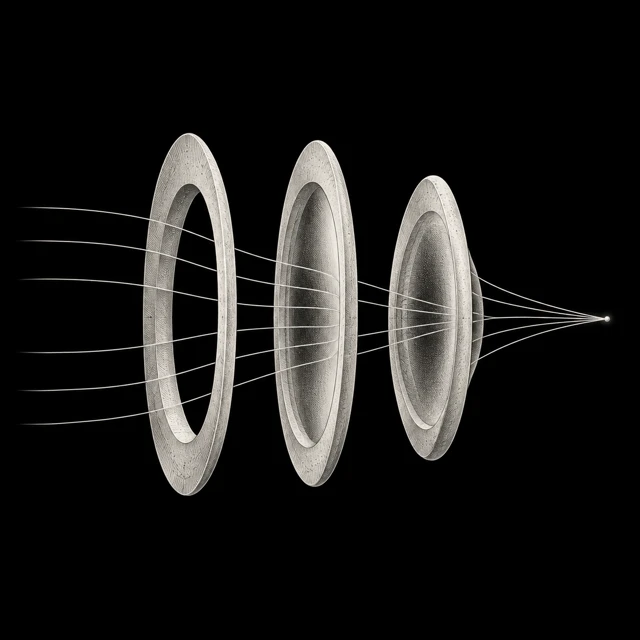
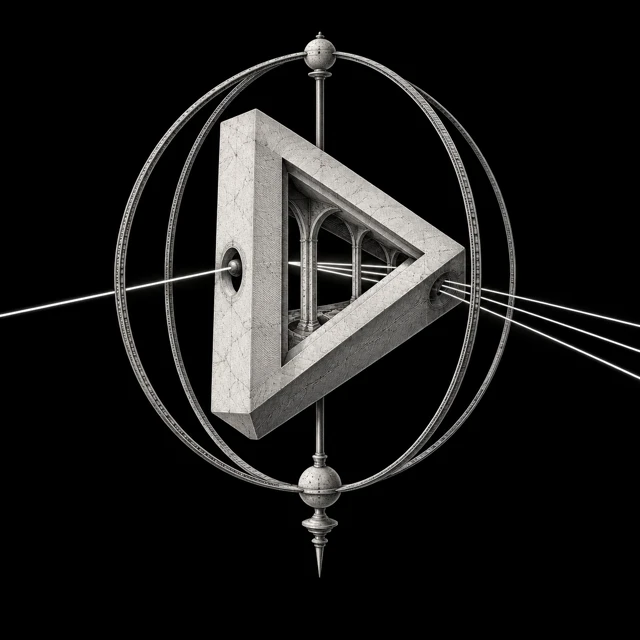
Bring the picture together.
Aggregate prices, order books, spreads, volume and recent activity across exchanges. Align genuinely comparable outcomes, time horizons and settlement rules.
PRISM / MARKET INTELLIGENCE
Business data, market signals, and analytics in one clearer view. Prism is being developed to connect fragmented information with the decisions your business needs to make.
In development at Obsidian Cube
Planned coverage, with more sources over time. Availability will depend on data access and compatible markets.
BEYOND THE HEADLINE PRICE
A price can tell you what a market implies. The depth behind it, the cost of trading it and how recently it moved help tell you how much attention it deserves.
Aggregate prices, order books, spreads, volume and recent activity across exchanges. Align genuinely comparable outcomes, time horizons and settlement rules.
Assess available depth, liquidity, freshness and agreement between sources. A thin, stale quote should carry different weight from a deep, active market.
Use statistical models and planned machine-learning calibration to combine signals, quantify uncertainty and learn from resolved outcomes.
AN INTERACTIVE LOOK INSIDE
Explore a hypothetical market question. Change the weighting or remove thin sources to see how the same inputs can tell a different story.
DEMAND OUTLOOK
Quality-weighted estimate
Compare the demand signal with your own sales outlook when planning inventory, staffing and seasonal capacity.
| Source | Probability | Depth | Weight |
|---|---|---|---|
| Venue A | 62% | $260k | — |
| Venue B | 60% | $190k | — |
| Venue C | 63% | $145k | — |
| Venue D | 58% | $90k | — |
| Venue E | 79% | $14k | — |
| Venue F | 34% | $8k | — |
Thin sources can move a simple average even when little liquidity supports their prices.
Deeper books, tighter spreads and fresher observations receive more weight in this example. The demo uses a fixed, transparent formula to illustrate that idea; it is not a trained Prism model.
The source range shows disagreement between inputs, not a confidence interval. The displayed estimate has not been calibrated against real outcomes.
Illustrative inputs and outputs, not current probabilities or exchange listings. Real-world calibration and machine-learning models are planned.
FROM MARKET MOVEMENT TO BUSINESS CONTEXT
Prism is being designed to connect market expectations with the questions your business is already asking.
Put consumer and economic expectations alongside internal forecasts to inform inventory, staffing and operating plans.
Track signals around weather, trade and disruption to explore sourcing, shipping and procurement scenarios.
Bring rate, energy and macroeconomic signals into budget discussions and capital planning.
See which sources moved, whether liquidity supported the move and where markets still disagree.
DESIGNED TO BE EXPLAINABLE
The planned output pairs a probability estimate with the context needed to use it well.
A combined estimate for a clearly defined outcome, with calibration evaluated against resolved events.
Visibility into depth, source concentration, freshness and disagreement behind the estimate.
Changes and scenarios connected to the operating questions that matter to your team.
Prism is a new product in development at Obsidian Cube. This page introduces its planned capabilities; the signal lab uses synthetic data and does not connect to exchanges.
Only markets with compatible outcomes, time horizons and settlement rules should feed a shared probability estimate. Prices and quote conventions will need normalization. Other markets may supply context without being treated as the same event.
The planned models will evaluate market-quality features and historical outcomes to improve weighting and calibration. Performance will need validation on unseen, resolved events. More data or more liquidity alone does not guarantee a more accurate forecast.
Prism focuses on market intelligence and probability insights for business decisions. Counterspan explores portfolios of event contracts shaped by business exposure. They are distinct products in development at Obsidian Cube.
PRISM / CONTINUE THE CONVERSATION
For research, data, and collaboration inquiries.